Spiral-wound microfiltration
Watch the video
Principle :
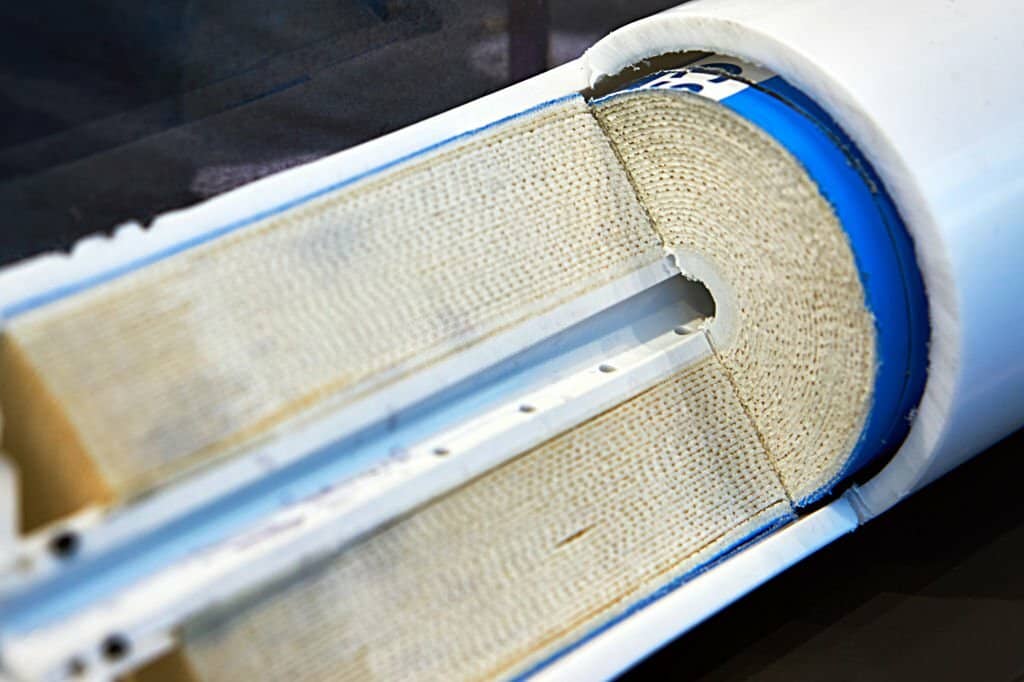
Spiral-wound microfiltration is a filtration process used to separate suspended solids and microorganisms from a liquid by passing it through a semipermeable membrane. This membrane is wound in a spiral configuration, maximizing surface area and allowing for efficient filtration. It is commonly used in water treatment, food and beverage processing, pharmaceutical manufacturing, and other industries where fine particulate removal is required.
Advantages :
- High Efficiency Filtration: Spiral-wound microfiltration offers high efficiency in removing particles and microorganisms from water due to its dense filtration membrane structure.
- Compact Design: The spiral-wound configuration allows for a compact design, making it suitable for applications where space is limited.
- Scalability: Spiral-wound microfiltration systems can be easily scaled up or down to accommodate varying flow rates and water treatment needs, providing flexibility in implementation.
Disadvantages :
- Clogging: The dense membrane structure of spiral-wound microfiltration membranes can be prone to clogging, especially when dealing with high levels of suspended solids or biological matter in the water.
- Maintenance Requirements: Regular maintenance is necessary to prevent fouling and ensure the continued effectiveness of the filtration system. This may involve cleaning or replacing membranes periodically, which can add to operational costs.
- Limited Filtration Capacity: While spiral-wound microfiltration is effective for removing suspended particles and microorganisms, it may not be suitable for removing dissolved contaminants or treating water with high salinity or extreme pH levels. Additional treatment steps may be required for comprehensive water treatment.


0
0
votes
Article Rating
Subscribe
Login
0 Comments
Oldest
Newest
Most Voted
Inline Feedbacks
View all comments