Floating nuclear power plant
Watch the video
Principle :
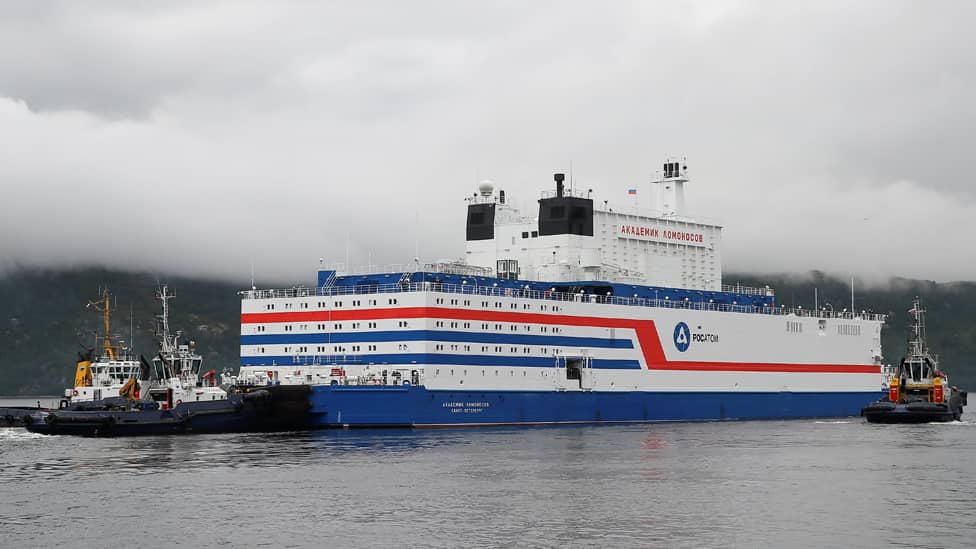
A floating nuclear power plant is a nuclear power generation facility mounted on a floating structure, capable of being moved to different coastal or riverine areas to provide electricity. These plants are often designed for use in remote regions, coastal areas, or islands where access to conventional energy sources is limited. They typically consist of a compact nuclear reactor mounted on a secure floating platform and are capable of generating electricity to power local electrical grids. Floating nuclear power plants can offer several advantages, including the ability to provide electricity in remote or inaccessible locations, the flexibility to relocate the plant as needed, and reduced seismic risks as they are situated on water. However, they also raise concerns regarding safety, nuclear security, accident risks, and radioactive waste management, requiring careful consideration during their design, deployment, and operation.
Advantages :
- Geographical Flexibility: Floating nuclear power plants can be relocated to different coastal or riverine areas as needed, allowing them to provide electricity where it’s required, even in remote or isolated locations.
- Reduced Seismic Risks: Due to their location on water, floating nuclear power plants may be less exposed to seismic risks compared to land-based installations, offering some resilience to natural disasters such as earthquakes.
- Potential for Long-term Operation: These plants can be designed to be relatively self-sufficient and operational for extended periods, potentially enabling stable and reliable electricity production over the long term.
Disadvantages :
- High Costs: The design, construction, and operation of floating nuclear power plants can entail significant costs, particularly due to technical challenges associated with construction on water and safety considerations.
- Safety Risks: While seismic risks may be reduced, floating nuclear power plants still pose potential risks to nuclear safety and security, as well as environmental concerns in the event of accidents or disasters.
- Radioactive Waste Management: Like any nuclear plant, floating plants require proper management of radioactive waste, which may pose additional challenges due to their location on water and the need to transport waste to appropriate facilities.
0
0
votes
Article Rating
Subscribe
Login
0 Comments
Oldest
Newest
Most Voted
Inline Feedbacks
View all comments