Elevated Water Tanks
Watch the video
Principle :
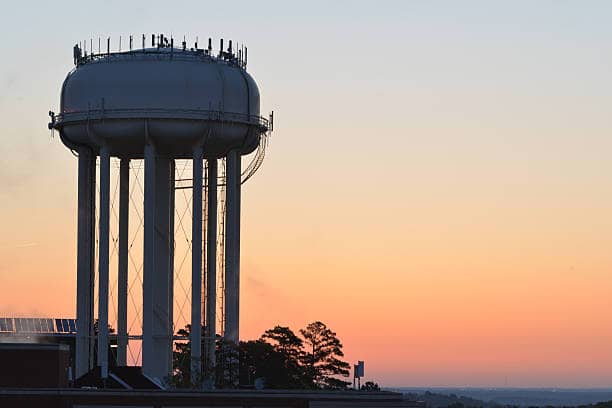
Elevated water tanks are structures designed to store potable water at a high elevation to provide sufficient and constant water pressure to water distribution networks. They are typically constructed from steel, concrete, or composite materials, and are often situated on towers or elevated structures to utilize gravity for water distribution. Elevated water tanks are essential for ensuring a reliable water supply, particularly in residential areas, commercial and industrial buildings, and for fire-fighting systems. Their height allows for maintaining adequate water pressure even during high demand or pump failures, thus contributing to the safety and efficiency of water distribution systems.
Advantages :
- Constant Water Pressure: Elevated water tanks provide consistent and sufficient water pressure through gravity, ensuring efficient water distribution even during peak demand periods or pump failures.
- Reliable Water Supply: These tanks play a crucial role in guaranteeing a reliable water supply by storing large quantities of water for residential, commercial, industrial areas, and fire-fighting systems.
- Reduced Operational Costs: By utilizing gravity for water distribution, elevated water tanks reduce reliance on electric pumps, which can lower energy costs and maintenance needs.
Disadvantages :
- High Initial Cost: Constructing elevated water tanks involves high initial costs due to materials, structural design, and the required height to ensure adequate pressure.
- Complex Maintenance: These tanks require regular maintenance and can be difficult to inspect and repair due to their height and complex structure, leading to additional costs.
- Visual Impact: Elevated water tanks can have a significant visual impact on the surrounding landscape, potentially raising aesthetic concerns or objections from local residents.


0
0
votes
Article Rating
Subscribe
Login
0 Comments
Oldest
Newest
Most Voted
Inline Feedbacks
View all comments