geothermal heating & cooling
Watch the video
Principle :
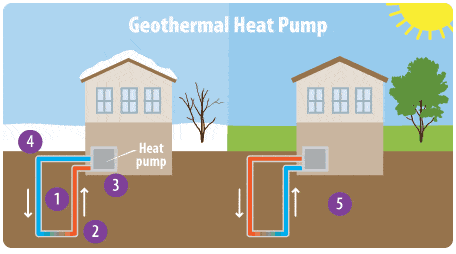
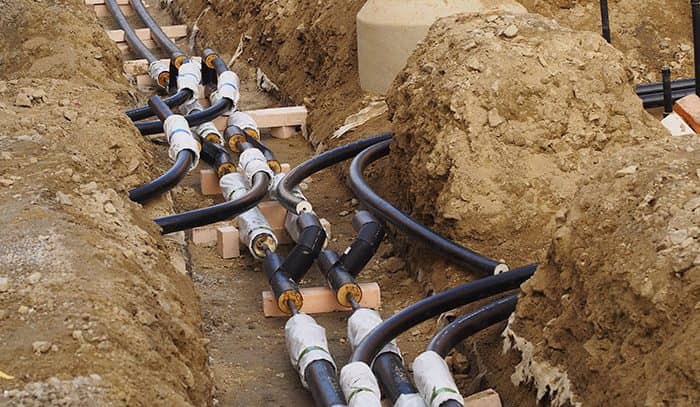
Geothermal heating and cooling is a system of heating and air conditioning that harnesses the natural heat stored in the ground to regulate building temperatures. These systems utilize geothermal heat pumps to extract heat from the ground during colder months and transfer it inside buildings to provide heating. During warmer months, the process is reversed, where excess heat is extracted from buildings and rejected into the ground to cool them. This technology utilizes buried pipe loops, called geothermal loops, to exchange heat with the ground. Geothermal heating and cooling offer an energy-efficient and environmentally friendly solution as they tap into a renewable and stable energy source. They are also considered sustainable as they reduce reliance on fossil fuels and associated greenhouse gas emissions.
Advantages :
- Energy Efficiency: Geothermal heating and cooling systems are highly energy efficient, as they utilize the natural heat stored in the ground, which remains relatively constant throughout the year. This reduces the need for traditional heating and cooling methods, resulting in lower energy consumption and utility bills.
- Environmental Benefits: By tapping into renewable geothermal energy, these systems significantly reduce greenhouse gas emissions compared to conventional heating and cooling systems powered by fossil fuels. They also have minimal environmental impact, as they do not rely on combustion processes.
- Long-term Cost Savings: Although the initial installation costs of geothermal systems can be higher than traditional HVAC systems, they often provide long-term cost savings due to lower operating and maintenance expenses. Additionally, geothermal systems have a longer lifespan, reducing the need for frequent replacements.
Disadvantages :
- High Initial Costs: The upfront costs of installing a geothermal heating and cooling system, including drilling and equipment expenses, can be prohibitive for some homeowners or businesses. This initial investment may deter potential users despite the long-term cost savings.
- Site Limitations: Geothermal systems require sufficient space for the installation of ground loops or boreholes. This may be challenging in urban areas with limited land availability or in areas where soil conditions are unsuitable for drilling.
- Complex Installation: The installation of geothermal systems can be complex and may require specialized knowledge and equipment. Improper installation can lead to reduced system efficiency or performance issues, necessitating additional maintenance or repairs.
0
0
votes
Article Rating
Subscribe
Login
0 Comments
Oldest
Newest
Most Voted
Inline Feedbacks
View all comments