Sonic bird repellent
Watch the video
Principle :
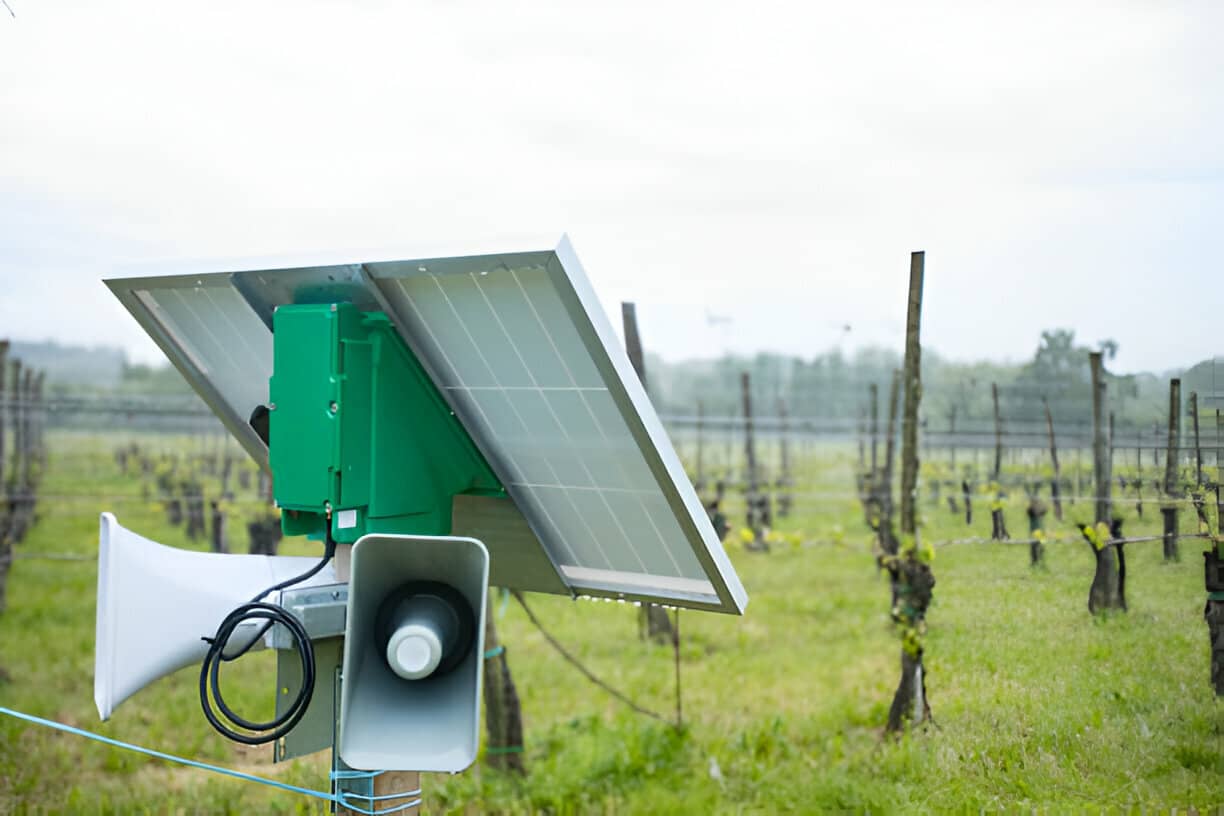
A sonic bird repellent is a device primarily used in agriculture to deter nuisance birds that can damage crops. These devices emit a variety of unpleasant or frightening sounds, such as bird distress calls, natural predator cries, or specially designed artificial noises meant to disrupt and scare birds. The goal is to create a hostile acoustic environment that encourages birds to leave the protected area and not return. Sonic bird repellents are particularly useful for farmers who aim to protect their crops in a non-lethal and environmentally friendly manner. By using these devices, they can reduce crop losses caused by birds without resorting to more aggressive methods like netting or chemicals. Additionally, sonic repellents can be programmed to emit sounds at regular intervals or randomly, enhancing their effectiveness by preventing birds from becoming accustomed to the noises. In agriculture, these repellents are often deployed in orchards, vineyards, grain fields, and other crops vulnerable to bird attacks. They help protect yields and crop quality while minimizing negative impacts on local ecosystems. Sonic bird repellents thus represent a valuable solution for farmers seeking to balance agricultural production and environmental conservation.
Advantages :
- Effective crop protection: Sonic bird repellents create a hostile acoustic environment that deters nuisance birds, reducing crop losses and protecting crop quality.
- Non-lethal and environmentally friendly method: Unlike pesticides and other aggressive methods, sonic repellents do not harm the ecosystem and have no negative impact on local wildlife, providing a sustainable and eco-friendly solution.
- Flexible programming: These devices can be programmed to emit sounds at regular or random intervals, preventing birds from becoming accustomed to the noises and increasing their long-term effectiveness.
Disadvantages :
- Noise nuisance for humans: The sounds emitted by the repellents can be unpleasant not only for birds but also for people living or working nearby, creating a noise nuisance.
- Variable effectiveness depending on species: Some birds may adapt to the sounds and no longer be frightened, reducing the effectiveness of sonic repellents for specific bird species.
- Initial cost and maintenance: Installing sonic bird repellents can represent a significant initial cost, and these systems require regular maintenance to ensure proper operation, which can be burdensome for some farmers.

0
0
votes
Article Rating
Subscribe
Login
0 Comments
Oldest
Newest
Most Voted
Inline Feedbacks
View all comments