gas cannon
Watch the video
Principle :
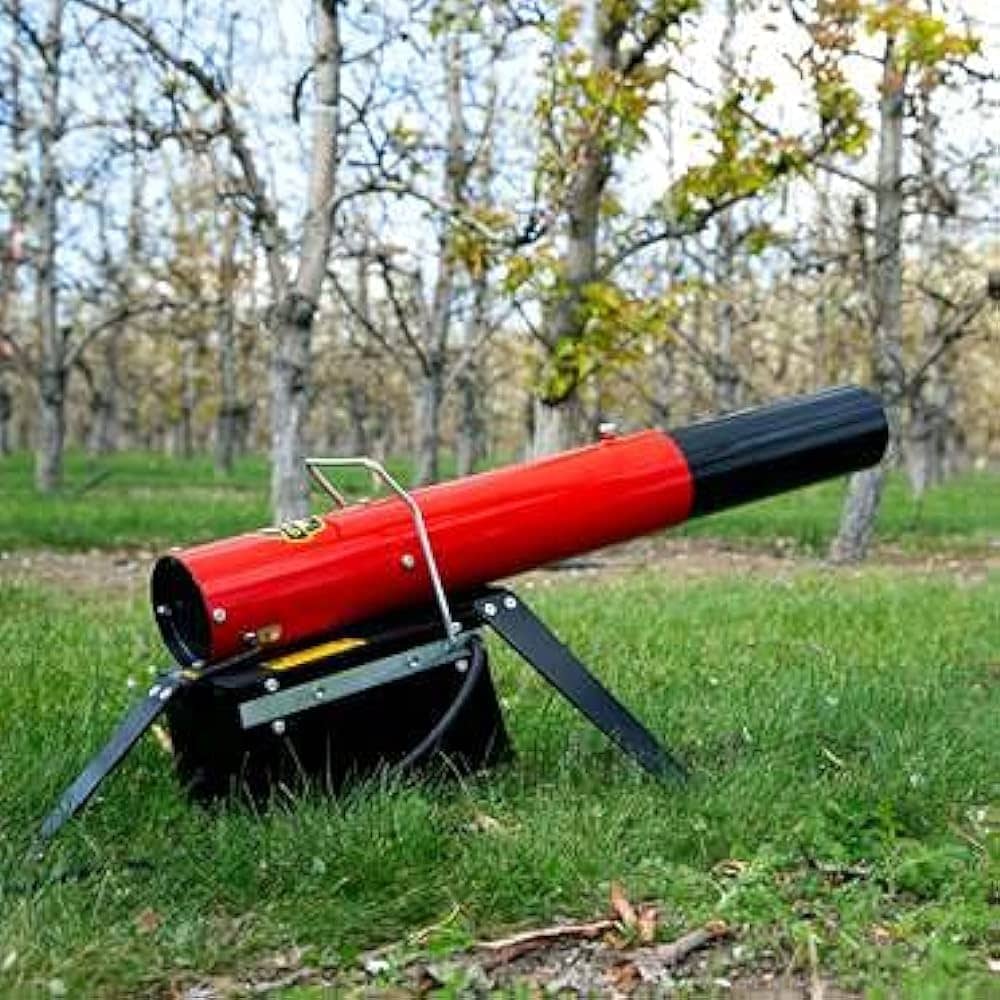
A gas cannon is a device primarily used in agriculture to scare and deter nuisance animals, such as birds and certain mammals, to protect crops. This device operates by using a controlled explosion of gas (such as propane) to produce a loud and sudden noise. This noise mimics the sound of a detonation, creating a hostile environment for the targeted animals and encouraging them to move away from fields and plantations. Gas cannons are often programmable, allowing for detonations at regular intervals or randomly to maximize their effectiveness and prevent animals from becoming accustomed to the noise. They are widely used by farmers as a non-lethal and environmentally friendly method to manage pests and protect crop yields.
Advantages :
- Effective crop protection: Gas cannons provide an effective method to keep birds and other pests away from agricultural fields, reducing crop damage and increasing yields.
- Non-lethal method: Unlike traps or poisons, gas cannons do not physically harm animals. They offer an environmentally friendly solution by deterring pests without causing them harm.
- Programmability and flexibility: Gas cannons can be programmed for detonations at regular intervals or randomly, maximizing their effectiveness and preventing animals from becoming accustomed to the noise.
Disadvantages :
- Noise nuisance: The loud noise produced by gas cannons can be disturbing to neighbors, farm workers, and domestic animals, potentially causing conflicts in populated or rural areas.
- Animal habituation: Over time, some animals may become accustomed to the noise of gas cannons, reducing the method’s effectiveness. Frequent adjustments and complementary strategies may be necessary.
- Operating and maintenance costs: Gas cannons require a continuous supply of gas (such as propane) and regular maintenance to ensure proper functioning, which can be an additional expense for farmers.


0
0
votes
Article Rating
Subscribe
Login
0 Comments
Oldest
Newest
Most Voted
Inline Feedbacks
View all comments